What We Talk About When We Talk About Money
by Andy Qifeng Zeng
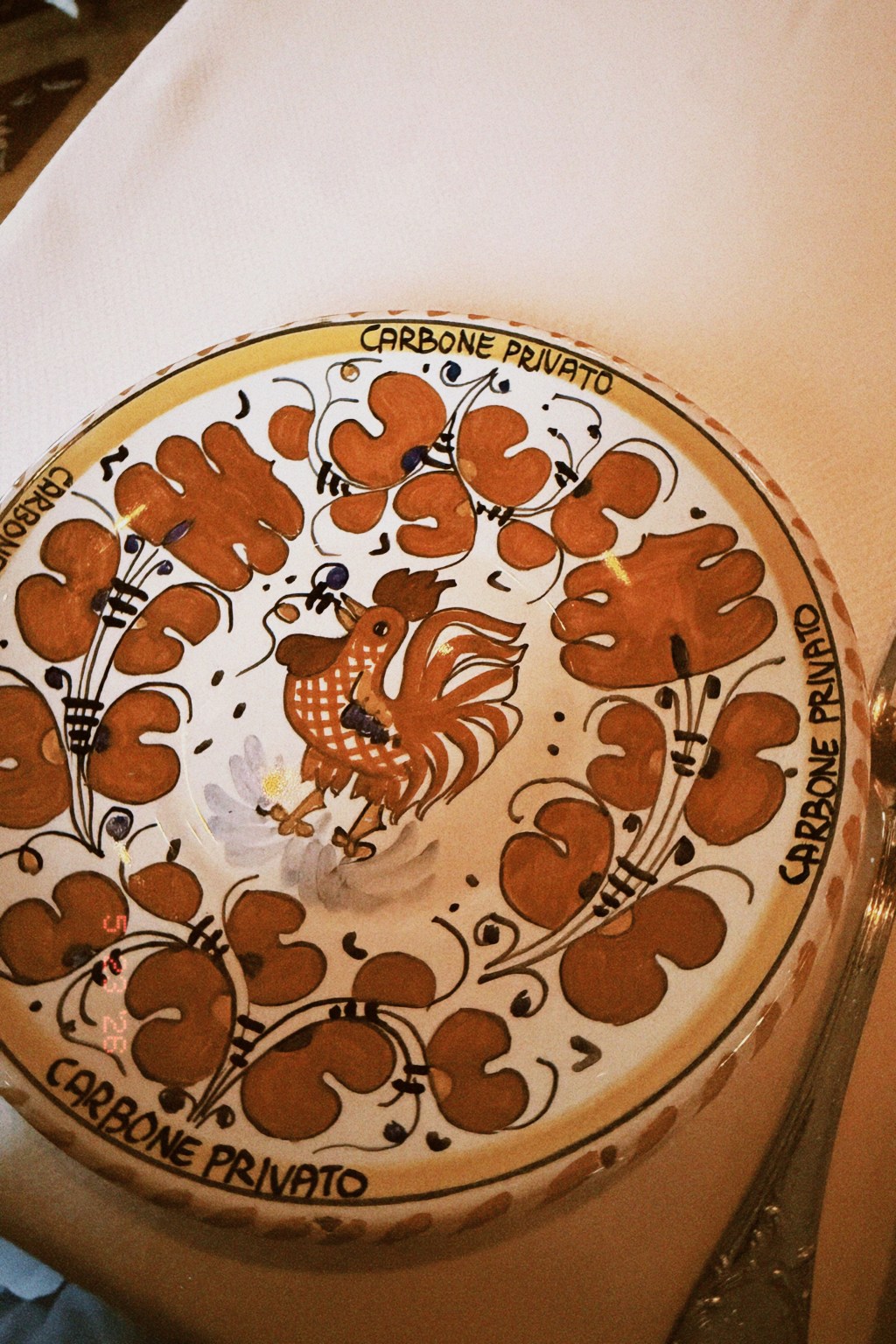
The four of us were sitting around the table at Carbone Privato, talking about love. Beside me sat my fiancée, Kelly. Across from us, Apollo was speaking. He was a quant at Citadel, which gave him the right. Next to him was Patrina, the woman I was trying to set him up with. She was my family friend, the daughter of another Chinese billionaire.
“Love for me,” Apollo said, looking at Patrina, “is about commitment. Emotions come and go—like, a perfect ten could pass you on the street, and you’d feel hot for a second—but really sticking it out for each other, even when things get tough, that’s what love is.”
Light wended around Patrina’s face, catching her high cheekbones. She was a composed, small-featured woman: the kind I used to like.
“Right,” Patrina said, turning to me and my fiancée. “That’s why you two are so perfect for each other.”
Kelly squeezed my hand. Her Cartier bangle knocked into my watch with a soft clink, and I had no choice but to pull my hand away. She was probably thinking about my ex. She didn’t know Patrina was my ex.
“I’m happy for you, Patrick. I really am,” Apollo said, turning to me too.
Apollo was the sort of man who was always questioning whether someone might be disrespecting him. Today, he called ahead for a booth, but we were seated at a table. We spent the first ten minutes on the subject of the table.
“But there’s gotta be a limit to it, right?” I said. “You can’t just—I mean, commitment only counts when it goes both ways. Like my parents. They’ve been married thirty years, if you can believe that. High school sweethearts. They tied the knot just before my dad fled to the US for his PhD. While he studied, my mom cleaned plates at a Chinese restaurant. No work visa, below minimum wage. But he knew what she was giving up. And you know what makes that mean something? Precisely the fact that she wasn’t blind. She saw the cost and chose to stay.”
Apollo nodded. “That’s optimal love.”
“That’s what real wealth looks like,” Patrina added. “It’s not about the money.”
“It’s never about the money,” Kelly said.
“You always used to say that,” Patrina said to me.
Kelly opened her mouth, but the waiter came over. He had a cartoon villain mustache and a red jacket. Kelly ordered the vodka rigatoni and the veal parmesan for the table. Apollo asked for the lobster fra diavolo. Patrina said she’d just have the Caesar. What she always had.
“Just a salad?” Apollo asked.
“Waist management,” Patrina said.
“Optimal.”
I ordered the chicken scarpariello and a bottle of the Donnhoff Riesling. Kelly rested her hand on my forearm, and I found myself looking at the white tablecloth.
“People talk about unconditional love like it’s the greatest thing in the world,” I said. “But unconditional love is just blind love. And blind love is not true love. In true love you keep your eyes open. You weigh what you have against what you’d have if you left, and every day you choose to stay. That’s what makes it count. It’s a bit like that Plato story—”
“The Symposium,” said Kelly.
“Right. So Plato says every couple used to be one big two-headed giant, and the gods split them apart, so now we wander around looking for our other half. But if that’s true—if you’re just fated to find a particular someone—you wouldn’t know what being in love with other people was like. Then, because you have nothing to compare it with, it’s not really a choice. If it’s not a choice, how can it mean anything?”
“So love has to be a choice,” Patrina said.
“Exactly. A daily choice. No, an every second choice.”
“So you choose Kelly every second,” Patrina said. Not a question.
Kelly picked up her glass. She didn’t drink tap, so we ordered Acqua Panna.
“By your logic, true love is ipso facto imperfect,” Apollo said.
“Something like that,” I said.
“So paradoxical, Patrick.”
Kelly squeezed my hand, and the bangle clinked against my watch again. She cut a piece of bread and put it on her plate but didn’t move.
“Go back to your parents,” Apollo said to me. “Your mom worked at a restaurant?”
“She cleaned plates at a Hot Szechuan in Urbana-Champaign for almost six years. She told me she made thirteen hundred a month, double my dad’s stipend, because some old white guy was hitting on her. Eventually he gave her his old Toyota. My dad says those were the best years.”
Patrina looked at me the way you look at someone telling a story you’ve already heard.
“Of course he does,” she said.
I looked at Patrina, then the acronym of some old French dude’s name on her crop top beneath the leather bomber. She was spreading her napkin on her lap. The waiter refilled our water glasses. Patrina watched him do it.
“Was it Freud who said we all want to kill our fathers and sleep with our mothers?”
I looked at Apollo.
“Not exactly,” Kelly said, setting down her bread knife. “Freud’s point is that in early childhood, the child forms an unconscious libidinal attachment to the opposite-sex parent and a rivalry with the same-sex one. The boy doesn’t literally want to kill his father. He wants to become him, because the father has what he wants: the mother’s desire. As we mature, that wish gets repressed and redirected, though every future relationship remains, in some way, a renegotiation of the first.”
Kelly said all of this very evenly, the way she talked about the few things she knew well. Kelly was doing an MFA. Not a Master of Financial Administration—sometimes I forgot that. She talked some more, but I didn’t hear all of it, too busy checking out other men’s wives.
“So we’re all just dating our mothers,” Apollo said. “That’s what I meant.”
“Not what I just said,” Kelly said.
“Is this what you guys talk about?” Patrina said to me.
Apollo checked his watch, flicked his wrist. Then he turned to Patrina. “What was your mom like?”
“I like her,” Patrina said.
“If you were a man, would you marry her?”
“No,” she said, after a moment. “But I’d want someone who wouldn’t treat me the way my father treated her.”
“What do you mean?” Apollo said.
No answer.
“Anyway,” I said, thinking about Patrina and her hot mother and whether I would’ve married either. “The point is they lasted.”
“Who did?”
“My parents,” I said.
“Oh, right.”
“So now there’s me. Through the PhD, through the start-up, through all of it. Through the money.”
“Through the money,” Apollo repeated.
We drank to that.
The food was solid, a little cold. Kelly’s spicy rigatoni had a nice kick, and the veal was tender, on the raw side. Apollo’s lobster sat with the whole shell on the plate. Patrina’s Caesar looked abundant, not like a salad at all. She’d eaten maybe a third.
“I think the money part is the hardest, actually,” Apollo continued, chewing. “Not making money. No, that’s the easy part. There will always be more money in the world. The Fed’s infinite money printer goes brrrrrr, and they can’t shut it off. But when money comes, really comes, that’s when you find out.”
“Find out what?” Kelly said.
“Who’s in it for what.”
Kelly set her fork down. She looked squeezed in that dress.
“What what,” she said.
“He just means it, like, literally,” I said, placing my hand on her knee under the table.
“I wanna know,” she said. Her engagement ring, a four-carat Harry Winston, cast a refractive glint in my eye. It looked great on her chubby finger, like a choker. Hard to take off.
“You’re basically saying people change when there’s money,” she added. “Fine. But people change when they get sick or old. People change when they get bored. People are always changing. That doesn’t mean what they had was fake. Maybe it just means it wasn’t meant to be.”
“Sure,” Apollo said, leaning back in his chair. “But you’re kinda proving my point. When money shows up, you find out if it was really meant to be. Money is the ultimate litmus test, because cash doesn’t lie, baby!”
“Touché,” Patrina hastened to add. “So the best way to know if you truly love someone is to ask yourself: if he were broke, would I still be with him? If the answer is yes, you’ve got yourself a keeper.”
Kelly was getting agitated.
“But this is a dumb hypothetical, n’est pas?” she said. “It’s like asking, babe, would you still love me if I were a cockroach?”
“You’re not a cockroach,” I said, shaking my head. Then I added, “But I’d still love you.”
I got up to use the bathroom. I looked at Kelly, but she looked away. She wouldn’t come along. Not even to try the Aesop soap. In the men’s room I washed my hands with the Aesop soap and applied the Aesop hand cream. Then, in the mirror, I looked at myself for a while. The face looked fine. A little creased, maybe. I wondered what Patrina had told Kelly while I was gone. I straightened my collar and went back.
When I returned, Apollo’s chair was angled toward Patrina. Their glasses were closer together on the white tablecloth. Kelly was on her phone, her thumb scrolling slowly. She put it face down when she saw me.
“Are we still talking about love?” I asked.
“No,” Patrina said. “We were talking about how much money the average person would need to live happily in New York without working.”
“Five million dollars is the new permanent underclass,” Apollo said.
Kelly made a face.
“There’s a Harvard study that says you don’t get happier after hitting 70k a year,” I said. “And what truly matters in the end is having long, healthy relationships.”
“So you think it’s not about the money,” Apollo said.
“It was never about the money,” Kelly said, turning the bangle on her wrist, the Juste un Clou. “It’s about being there. It’s about showing up for each other when it matters.”
I should have felt good about that. I think I did feel good about it. Her words carried a kind of authoritative finality, so we all stopped talking. The light from the overhead lamps was warm and gold on the tablecloths. People thinned out around us.
“To showing up,” Patrina said, raising her glass.
She looked at me and drank. Then Kelly drank. Then the waiter came back with the check. Apollo put down his Amex. I did too.
“Can I see your watch?” I asked Apollo.
He took off his 5740P and handed it to me.
“I never understood the platinum perpetual calendar,” I said, turning it in the light. “It looks just like steel.”
“That’s the point. It’s very if-you-know-then-you-know. I went through the whole Patek catalogue before I settled on it—the 5126, your 5990—but this one just felt right.”
“The dial is great,” I said. “So perfectly proportioned.”
I unclasped my own and handed it to him.
“Sorry it’s scratched-up,” I said. “I swear it was brand new not long ago.”
Kelly sniffed. She pulled her wrist from mine, her bangle sliding off my arm, where my watch would’ve been.
“Why do men like watches so much?” Patrina sighed.
“They are pieces of art,” Apollo said. “Racing machines on the wrist.”
“They’re just toys,” I said. “And I love toys.”
“I wish I knew what I loved,” Kelly said. “Sometimes at twenty-six I feel too old to love anything.”
“Twenty-six is not old, babe,” I said.
I put my hand back over hers, feeling the bangle warm from her skin. I thought about what she loved: the Acqua Panna, the Juste un Clou, the way the Donnhoff tasted double-decanted. I knew she loved Carbone.
So we sat there, taking turns at the Riesling. We said words, sentences even. But no one moved, not even when the waiter set the check back on the table.
Andy Qifeng Zeng is a writer from Beijing and an MFA candidate in Fiction at Columbia University. Find more of his words at andyzeng.io.
Photo Credit: Andy Qifeng Zeng

Leave a Reply