All That is Solid Melts into Ghosts:
Spectral Production and the Horror of Post-Industrial Capitalism
by Jon Greenaway and Áron Lődi
[Author’s note: I am profoundly grateful to visual artist Áron Lődi for first telling me the story of the Dunaújváros mill and the struggle of the workers there over the last half decade or more.]
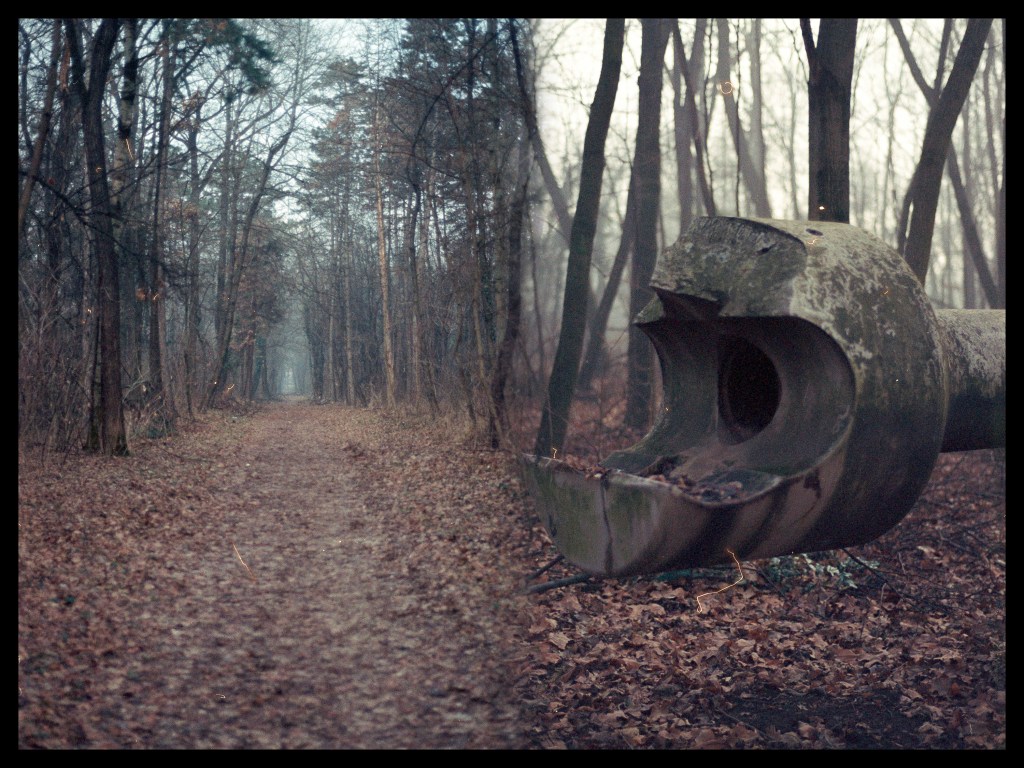
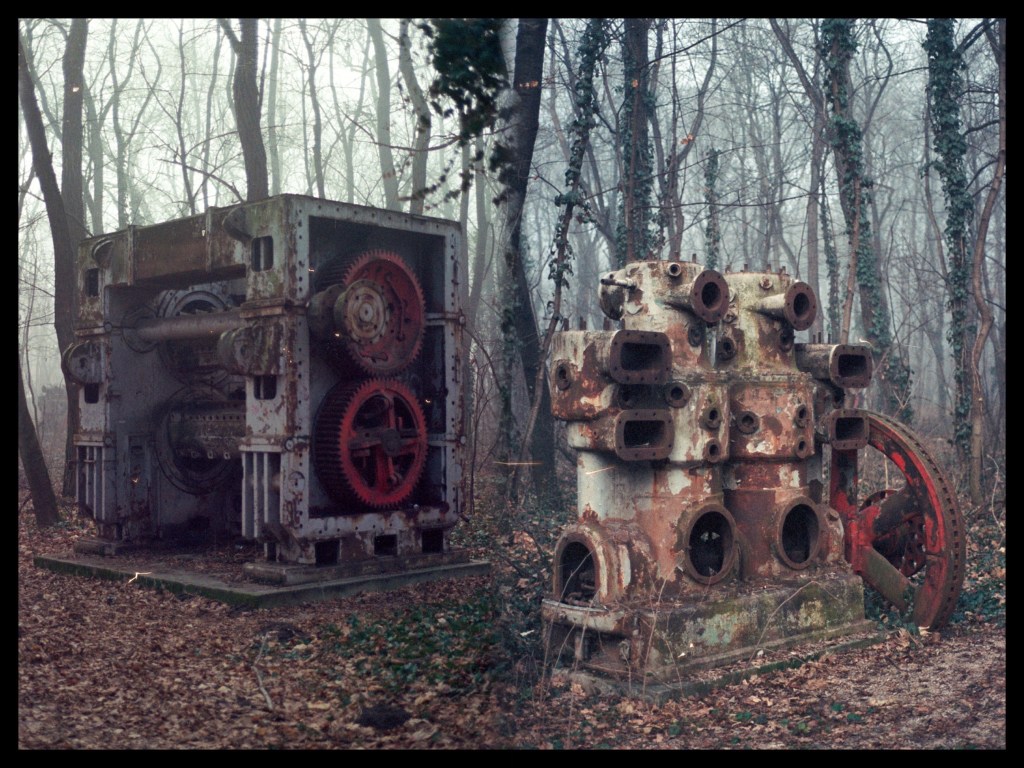
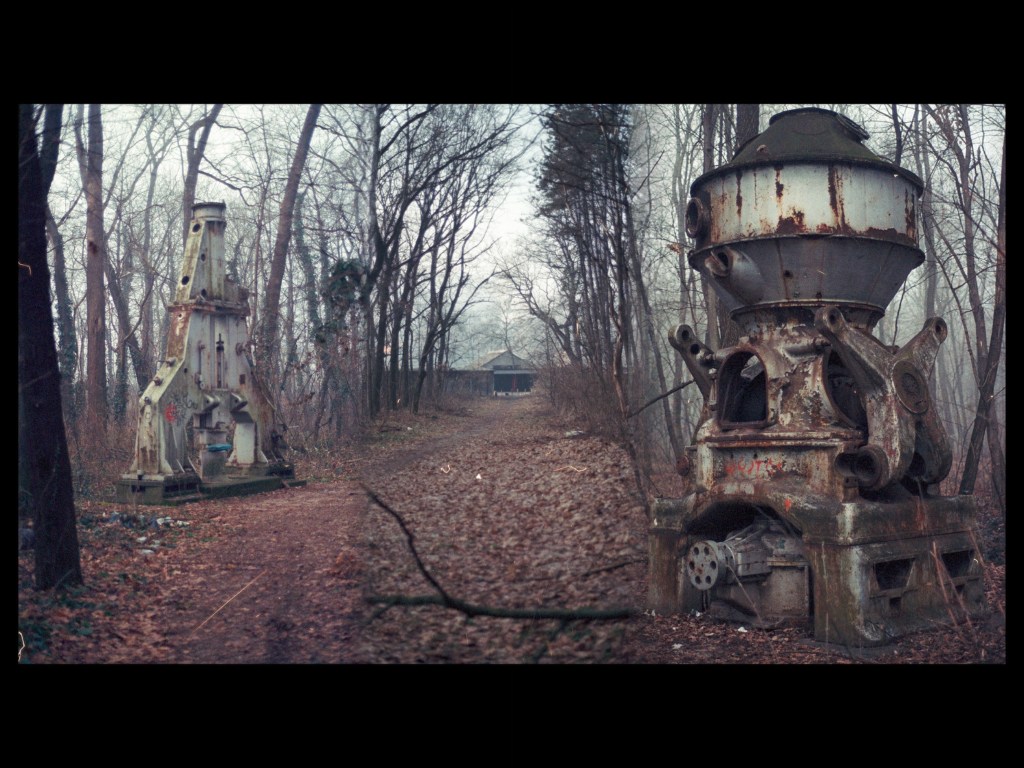
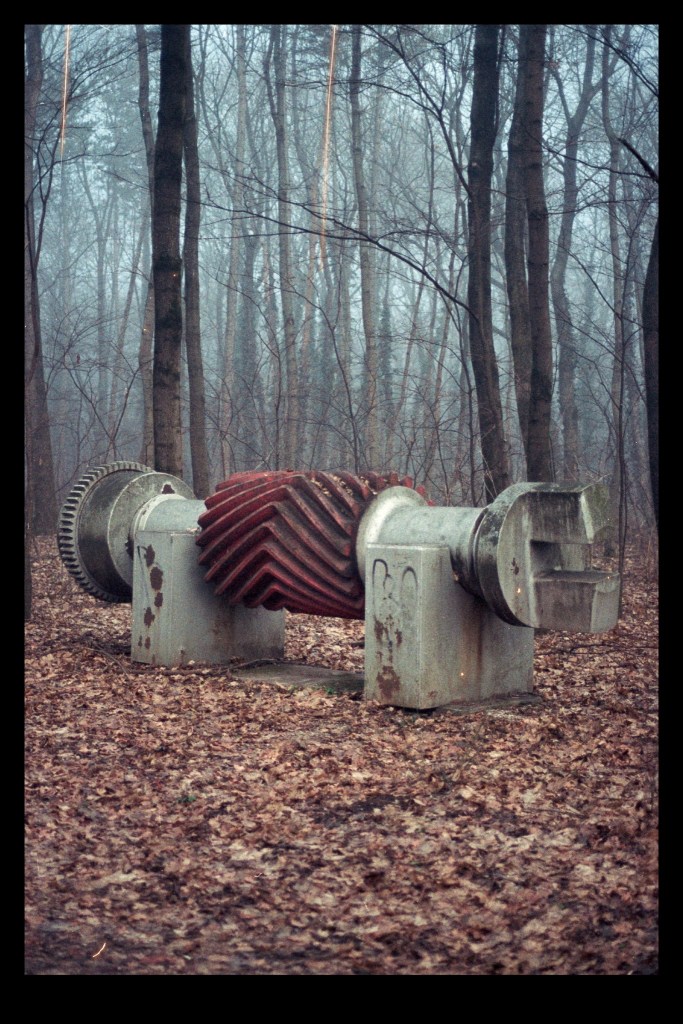
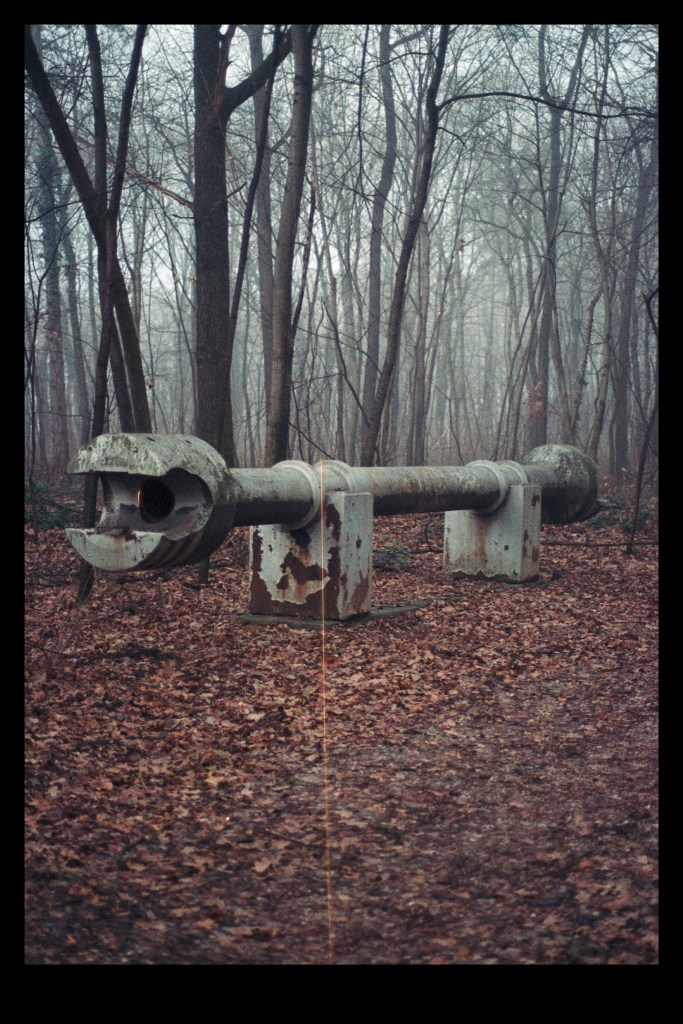
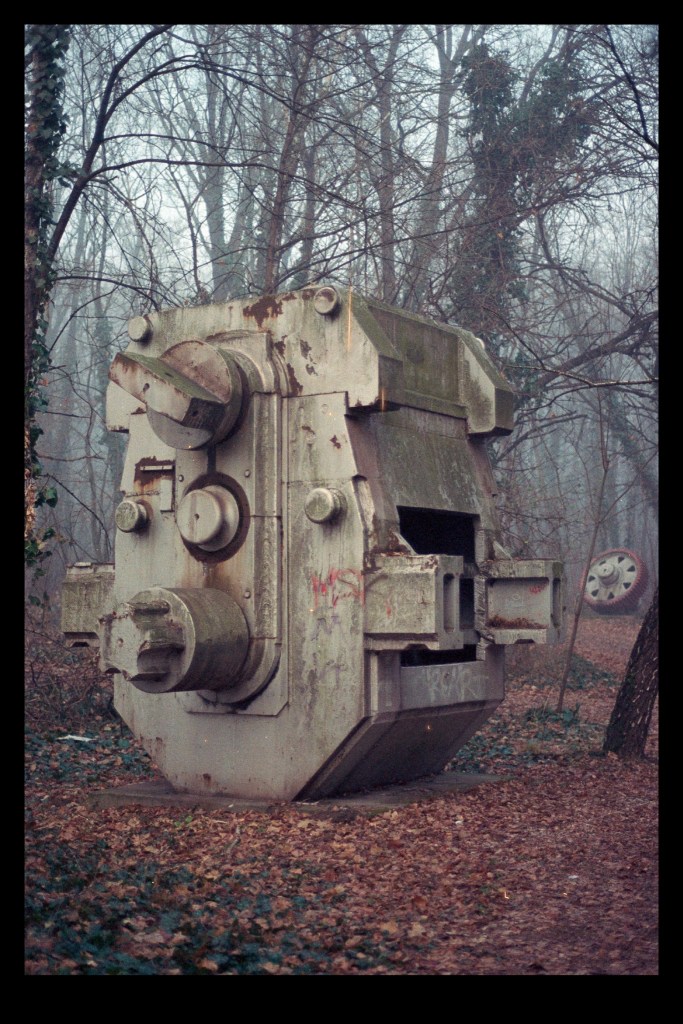
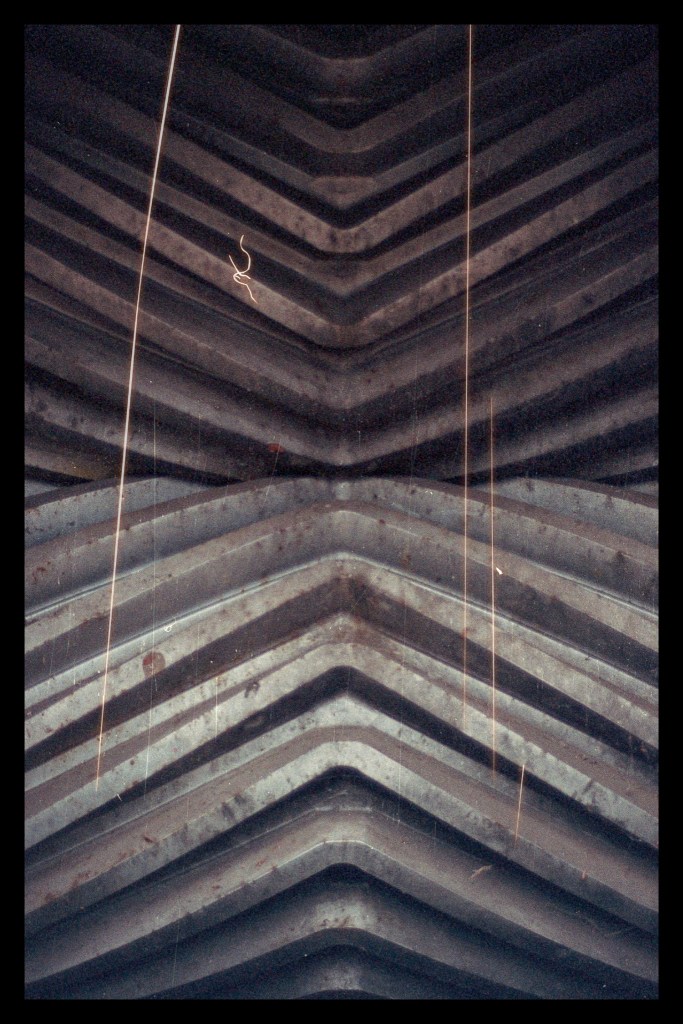
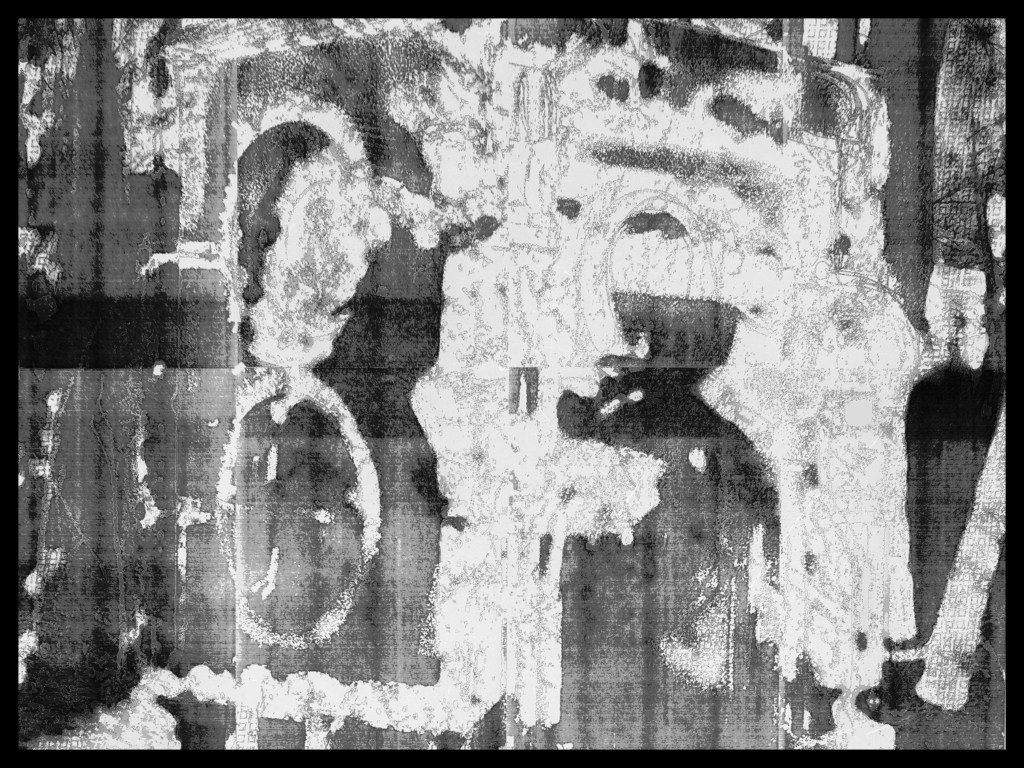
[Photographer’s note: Factory-Becoming-Metal is a series of photographs taken in the forest beside the gates of the Danube Ironworks in Dunaújváros, Hungary. The images depict discarded heavy machinery from the country’s former socialist steel industry, objects placed among the trees in the early nineties.]
1.
Follow the Danube River south from Budapest and before too long you’ll come to the small town of Dunaújváros. Seen from above, the town is marked by stacks of panelház: the ubiquitous blocks of prefabricated concrete flats that were constructed during the Soviet era and are still wildly common across much of Hungary, East Germany and other post-Soviet states. But what truly marks Dunaújváros is the hulking span of the old ironworks. For more than fifty years, the town was known for its metalworks which was, by some distance, the largest employer in the entire area.
Back in the late 1940s, at the behest of the Hungarian Communist government and with the approval of Moscow, the site was chosen for constructing new metalworks. In many ways, it was perfectly suited for such heavy industry, being centrally located in the middle of the country, with excellent wider transportation links. The first elements of the site were opened in the 1950s along with prefabricated barracks and living accommodations for the people building the site.
In a sense, the metalworks and the surrounding town were born hand in hand. As construction advanced, the developing town was given the name Stalin City, and the industrial company was called the Stalin Ironworks. At the end of February 1954, with Imre Nagy in attendance, blast furnace number one was officially handed over to the workers. Post-1956 and the Soviet invasion of Hungary, the town was renamed to Dunaújváros and the ironworks was called Dunai Vasmű.
What English language sources there are suggest that the history of the plant between the 1950s and 1980s was one of general success: rising production, regular modernization of production technology and a large branch of the labour union Vasas, which many, if not most, of the factory workers would join. In the late 1980s after the global oil crisis, and what’s known in Hungary as the “change of regime,” the ironworks was a loss-making concern, but still employed over 11,000 people.
By the 1990s, the reform of the Hungarian state had led to privatization of state assets across the country, including the Dunai Vasmű works. By 2004, the factory was owned by an industrial holding company—the Donbas group—which, as its name suggests, was a Russian and Ukrainian venture. Over the next two decades, the factory was essentially brought to the brink of bankruptcy: stymied by lack of resources, lack of clients and a management that saw the factory as an asset to fight over, rather than a site that could be modernised and returned to production.
In 2022, Russia invaded Ukraine and the factory itself was left without management. Without management, without clients and without the necessary resources, there was no way of producing steel at the factory. But the factory equipment needed maintenance. Should the furnace be allowed to go out and cool, it could well have been impossible to reignite it. Workers were not being paid nor were they producing anything, but the very structure of the factory still necessitated their presence. They were, in effect, trapped. Of course, they could walk away. But go where? Do what?
At some point in 2022, the government stepped in to subsidize the workers’ salaries for a time and the Duna Steelworks was liquidated. The scraps of the original company were reformed into two new businesses and attracted attention from the British-Indian company Liberty Steel who stepped in and purchased both of these new companies and the factory, making grand promises of modernising the equipment and installing new technology to make production more environmentally sustainable and economically competitive.
The takeover was approved some time in October of 2023, but unsurprisingly nothing really changed and no production resumed. In fact, this state of affairs was preferable for the new owners. With the factory producing nothing, the ownership could sell off the factory’s CO2 emissions quota as a tradeable financial commodity allowing Liberty Steel to draw money from the factory’s spectral capacity for “work” in order to pay off the wider company debts – a strategy which had been put into practise multiple times. By June of the following year, the coking plant stopped working. Then, the final blow.
Monday, June 23rd 2025, 1,700 people were fired in a single day. As reported in the Hungarian press, shift workers were lined up in alphabetical order to receive their paperwork confirming their unemployment. A week or so later 800 more people were fired, leading to at least 2,500 job losses in a town with a population of around 40,000 people. Contradictory reports in the press are followed by rumors in the town that maybe work will restart. The odds are bleak. The site remains silent, an industrial ruin, slowly decaying.
2.
Historically, the development of the novel was connected to particular shifts in the structures of capitalism. This is equally true of the gothic, because horror has always been a useful mode for the aesthetic and narrative exploration of the nightmare of how capitalism functions. The Gothic novel as we recognize it today emerged in the late 1700s and early 1800s. As Horace Walpole put it in his famous forward to his 1764 novel, The Castle of Otranto, the emerging form of the Gothic romance was an attempt to blend the chivalric traditions of older narratives with the more contemporary novel of sensibility developing around the same time. This was, of course, all filtered through Walpole’s particular blend of antiquarianism and his view of history. As critics like Diane Long Hoeveler have pointed out there was a distinct politics at work here. What she termed “the Gothic Ideology” was a potent blend of anti-Catholicism and English nationalism set up as a Protestant bulwark against the apparent political and theological radicalism of Europe.
Another way to understand this is that the early English Gothic novel involves a distinct influence from the capitalism of the time, one focused around issues of inheritance and property. This would also be a major discursive influence on the novels of Jane Austen, who wrote her own Gothic parody in Northanger Abbey. The novels of Walpole and to a greater extent the more popular Ann Radcliffe are often directly concerned with inheritance and large estates which would frequently generate income in rents.
Ellen Moers in her landmark Literary Women (1976) offered the idea of the “Female Gothic.” The Radcliffean heroine is confined within the large and complex estate but exerts ownership over it. By the end of the novel, she secures its potential income through exposing and explaining the supernatural events that occur within it.
As the nineteenth century unfolded, there were multiple sociological shifts in the positions of readers and authors and an explosion of interest in the Gothic novel. If the original Radcliffean Gothic novel was exhausted by around 1820 with the publication of Melmoth the Wanderer, the Gothic left behind the castles and estates and turned decisively toward the new urban centers developing as capitalism industrialized in both England and North America. Here emerges what Bridget Marshall terms “the Industrial Gothic.”
This gothic mode is exemplified by books like Catherine Read Williams’s Fall River, An Authentic Narrative (1833), Frances Milton Trollope’s The Life and Adventures of Michael Armstrong, The Factory Boy (1840), Elizabeth Gaskell’s Mary Barton: A Tale of Manchester Life (1848), David Pae’s Lucy, The Factory Girl; or, the Secrets of the Tontine Close (1860), and Mary Elizabeth Braddon’s The Factory Girl, or, All Is Not Gold that Glitters, a Romance of Real Life (1863). A crucial point that Marshall brings out is that:
“Industrial Gothic novels of the first half of the century were tied to real-life events and conditions, and authors insisted on the reality of their portrayals. In the latter half of the nineteenth century, the industrial Gothic novel was less about documentation and reform and more about entertainment. These later novels continue the trend of engaging the non-working-class reader in the plight of the industrial worker; however, they were also read by working-class readers who probably empathized with the victimized workers in even more profound ways, seeing a reflection of their own struggles, but also the potential for escaping from them, if only imaginatively.”
An important aspect to this kind of industrial Gothic is the degree to which there was a particular homology between the gothic novel (often criticised for its lurid melodrama) and the real-world conditions of the factories and the violent exploitation of the poor. Here the politics of the nineteenth century factory becomes clearer: Marshall quotes Engels who referred to the Manchester workhouse as the “Poor Law Bastille”:
“A phrase that appears repeatedly in newspapers of the times, further bolstering the negative associations between workhouses, factories and prisons. Additionally, the conditions in workhouses were such that they effectively made poorly compensated waged factory labour appear preferable in comparison.”
Labourers of the nineteenth century—who were also readers of the extremely popular industrial gothic novels of the day—understood their position within a framework that wouldn’t be out of place in a Gothic horror story. They were trapped, even imprisoned. This was not due to any kind of crime, but a direct product of economic exploitation, encompassing restrictions on their time, deprivations of the body and a forcible abnegation of autonomy. To be a factory worker was to reckon with the fact that one’s body was not one’s own in any real sense.
Indeed, Engels’ The Condition of the Working Class in England is best grasped as a body horror text as it details the ways in which the factory remade the body through the infliction of violence in everything from industrial accidents to the social murder of poverty. In short, the Gothic castle of the eighteenth century became the factory of the nineteenth century i.e. a site of entrapment and work for those connected to it. As Marshall writes in the conclusion to her book: “Depending on the particular mix of terror and horror in any given Gothic work, it is possible that the reader could be awakened, and thus potentially ready to make a change; or annihilated, and thus resigned to the state of things as they are.”
The factory functioned as a phenomenological engine for capitalism, serving as backdrop for an exploration of its horrors. In all of its anxiety, dread, and panic, this is detailed in the great twentieth-century novel The Jungle. Upton Sinclair’s 1906 novel renders in far more politically explicit terms what the more liberal, reformist factory novels of the nineteenth century also highlighted: that the very body of workers are physically shaped by forces of capital.
Newly arrived to America from Latvia, Jurgis is confronted with the sheer physical violence and horror of the meatpacking industry: the work isn’t just demanding, but dangerous. The conditions put them at risk, and diseased meat makes workers sick.
Just as the factory novels of the nineteenth century used the emotive and sensational horrors faced by the working classes to advocate for reforms and for a greater awareness of the horrors workers endured, Sinclair’s novel was a spur for American unionization efforts and even led to substantial political reforms of the meatpacking industry.
The crux of The Jungle comes by rendering the political forces of this particular moment of capitalism explicit. Jurgis ends up destitute and criminalized, but then he runs into another character who was a guest at his wedding. He’s invited to a socialist meeting, and it’s in finding the wider context of socialism that his own experiences start to make sense and he commits himself to the cause.
If, historically, the novel was concerned with representing the question of how we should live, Sinclair understands the question more accurately to be how we can afford to live. What happens if one cannot afford not to work? As the early Industrial Gothic understood, and as Sinclair’s novel makes viscerally clear, the result is that the flesh becomes another resource to be expended, blood poured out for the perpetuation of industry.
3.
But what happens to the literary, political and aesthetic mechanics of the Industrial Gothic when the industry itself evaporates? If Sinclair’s The Jungle, and the factory novels of the nineteenth century alternately terrified and enraged liberal and middle class readers with the literal, bodily consumption of the working class by the roaring engines of capital, then the silence of the modern Dunaújváros mill demands an entirely new aesthetic framework: we are now in the Post-Industrial Gothic age.
The horror is no longer the visceral grinding of gears and flesh or the endless hours of labor or the exploitations of the slaughterhouse, but the seamless extraction of value from a void. When Liberty Steel siphons away money from the factory’s tradeable CO2 emissions quotas, they are monetizing the literal thin air of non-production. The mill is no longer a site of physical exploitation. Indeed in the current iteration of capitalism, the body of the worker isn’t worth enough to exploit in the ways that it used to be. Rather it’s only the potential labour of the worker that is needed so it can be traded as a financial commodity.
The workers trapped tending an inexorably cooling furnace represent an evolution of the Radcliffean heroine locked in a decaying estate. They are not producing goods, nor are they generating traditional wage-value. They are suspended as the ghostly custodians of a financialized asset. In contrast to older horror stories, the monster in this contemporary narrative is devoid of physical shape. There is no factory overseer anymore, and no lascivious uncle out to deprive workers of our inheritance, but rather a dispersed entity of global holding companies, debt restructuring, and carbon derivatives that feeds on the ghost of labor rather than labor itself. If, as Marx and Engels wrote in The Communist Manifesto, that “all that is solid melts into air,” that the crucible of capitalist industry could burn away all old social relations and fundamentally reshape the bodies of workers into useful tools, now all that is solid melts into ghosts.
The hulking ruins of the old Stalin Ironworks function like the ruined castles that populate the novels of Radcliffe and Walpole, looming over the town of Dunaújváros as a monument to a dead system that still violently dictates the lives of the living. One only need look at the reactionary turn of contemporary European politics to see how useful the spectre of communism still remains to authoritarian politicians who are all too eager to extract whatever fidelity they can, getting the most from the old red scares.
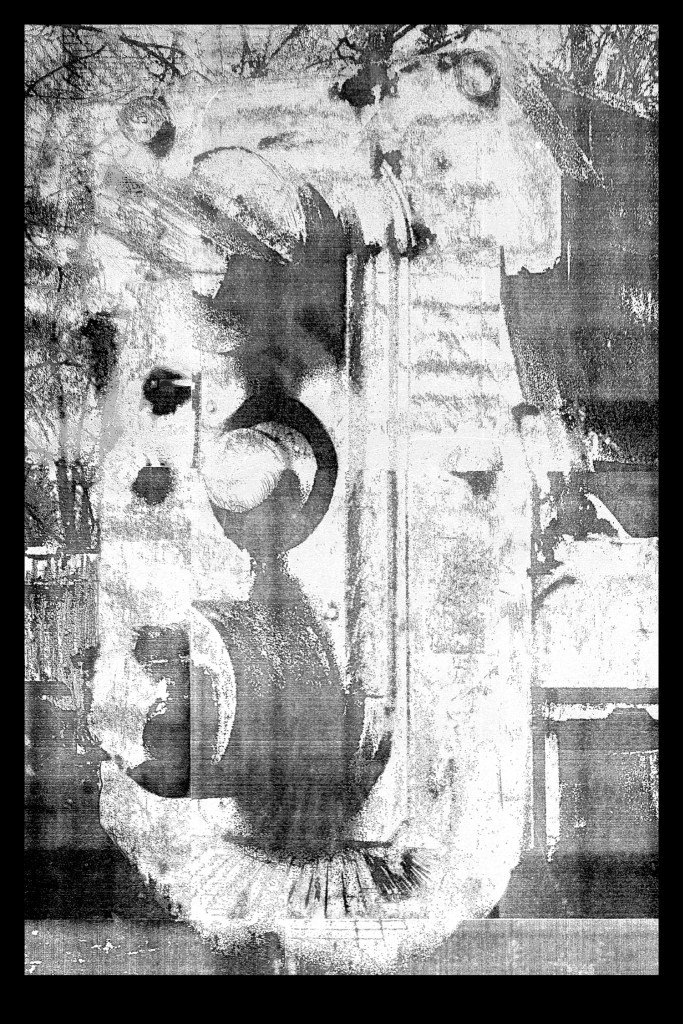
Ultimately, it seems the true nightmare of twenty-first-century capitalism is that it no longer requires our physical bodies to sustain its endless appetite. It can simply liquidate our communities, and leave us haunting the hollowed-out architecture of an era that has already died.
In his book Hinterlands (2018), the communist geographer Phil A. Neel wrote of the debt economy as an almost ritualistic dark power “forcing human life into endless, mechanical processes determined by the vastly irrational rationality of an economy that is premised on infinite growth.” Neel’s description of the ritual allows for a global vision, connecting the Dunaújváros factory to the wider world of Post-Industrial horror:
“Everything blooms outward and splinters apart. Each individual is gradually alienated from all others as the heart of production becomes more opaque, the connection between every node in the supply chain more distant, and the basic infrastructure of the world more complex. The ritual reaches down to the depths of human identity. We are defined increasingly by work and debts and purchases and each seems every year to resemble more the others until maybe sometime soon all three will simply fuse into a single form of near-complete evisceration.”
Thus, Dunaújváros is not simply a local story of deindustrialization but synecdoche for a wider problem. This aesthetic shift from the visceral machinery of the nineteenth-century factory to the haunting abstraction of financialization permeates contemporary media too, cementing the Post-Industrial Gothic as a vital contemporary cultural vocabulary. We can see this vividly in media like Zach Cregger’s film Barbarian (2022). Barbarian is set in Detroit, a city that, much like Dunaújváros, was hollowed out by industrial capital flight. The film explicitly contrasts the subterranean, physical monstrosity of twentieth-century bodily exploitation with the modern,
frictionless horror occurring above ground: the algorithmic extraction of wealth via short-term rental apps operating in a desolate, rotting urban carcass.
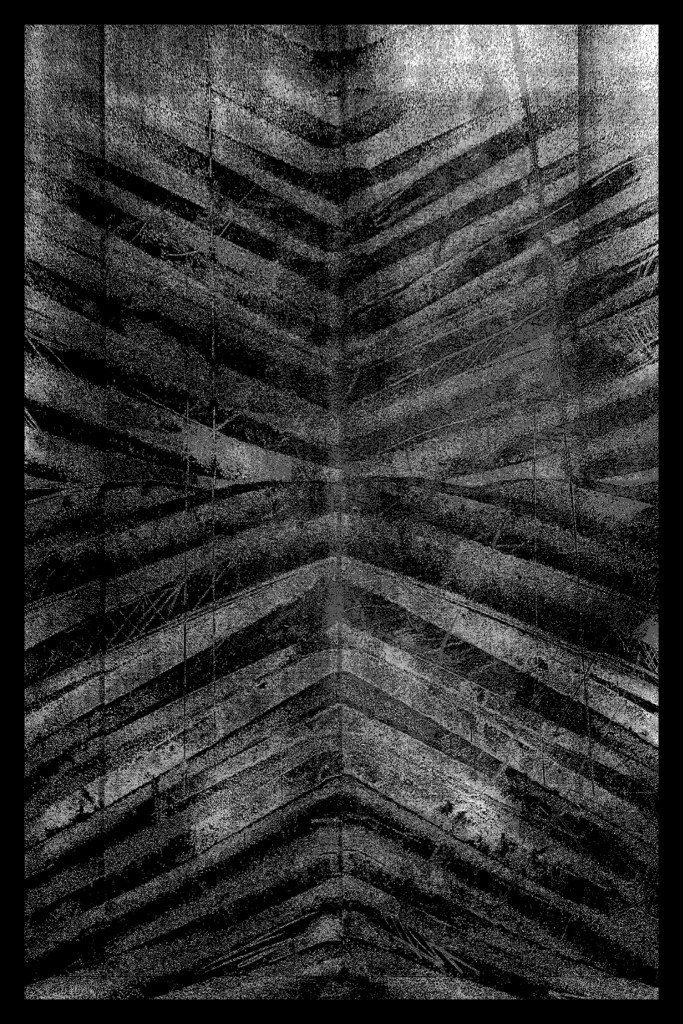
Another example of this Post-Industrial Gothic is masterfully articulated in Cardboard Computer’s video game Kentucky Route Zero (2013–2020), an atmospheric journey through a magical-realist American rust belt. The game replaces Walpole’s Gothic castle with the “Consolidated Power Company,” a monolithic corporate entity that absorbs marginalized workers into a subterranean and inescapable monopolistic bureaucracy. Ultimately, these workers are revealed to be literal ghosts: laborers, reduced down to their bones and trapped in an inescapable cycle of bondage, eternally toiling to pay off a debt that can never be cleared. In both texts, as in the silent corridors of the Dunai Vasmű mill, the monster is no longer simply the grinding gears or flying machinery that consumes the physical body, but the vampiric abstraction of late capitalism itself.
The continuing relevance of the Gothic and a Gothic Marxism is in how it allows for an evolving understanding of the subjective nature of capitalist extraction. In other words, grasping what it feels like to be a subject of late capitalism is best done through the language and aesthetics of horror. How else to apprehend a world in which vast swathes of us are seen as fundamentally disposable? We have moved from the haunted aristocracy of the old feudal estate, to the blood-soaked machinery of the industrial workhouse, and finally into the sterile, emptied out void of the financialized present. In this light, the tragedy of Dunaújváros is not simply a tale of regional economic decline, or a historical insight into the ruins of the Soviet project. Rather, it is the definitive horror story of our age.
Within the realm of post-industrial horror, value is entirely untethered from human labor. It is extracted instead through the ethereal trading of carbon quotas, the endless reshuffling of corporate debt, and the ruthless liquidation of community assets. The true terror of the Post-Industrial Gothic lies in this realization of human obsolescence. The monster of late capital no longer wants to physically dominate, consume and exhaust the worker’s body, as it did in Upton Sinclair’s Chicago or Elizabeth Gaskell’s Manchester. After all, why bother? Rather it
merely wants the worker to disappear entirely so the underlying financial vehicle can be stripped bare. The horror is no longer exploitation, but irrelevance and disposability.
If the classic Industrial Gothic sought to awaken the nineteenth-century reader to the physical brutalities of the factory floor—while fostering a nascent class solidarity through a shared visceral terror—the Post-Industrial Gothic can illuminate the ruins of our contemporary landscape.
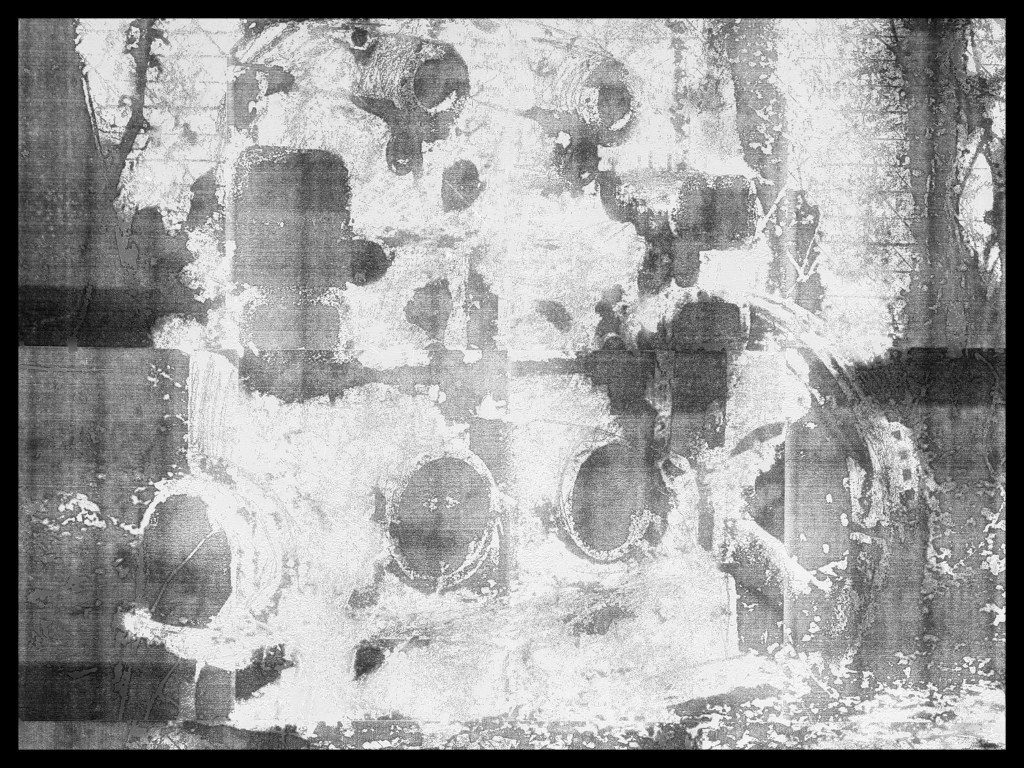
The artist Áron Lődi wrote to me and told me that back in 1991, the forest near the main entrance of Dunaújváros was used as the site of an industrial expo. As the Soviet Union fell, old industrial machines were put on exhibition showcasing heavy machinery from other closed plants from different parts of the socialist bloc. There they remain, both ruin and graveyard for the death of a particular model of the horrors of industry.
We are, undeniably, surrounded by the ghosts of labor, trapped in the decaying ruins of a twentieth-century dream, walking past the rotting hulks of great machinery that will never again be used as it once was. But in reading these silent industrial ruins as texts of active horror rather than passive decay, we refuse to let workers simply fade into the margins of a balance sheet or the abstract euphemisms of “human capital.”
The point is not to succumb to a kind of Fordist nostalgia or a fetishism for the good old days of direct capitalist exploitation as appealing as that might be. “Say what you will about Henry Ford but at least I could afford a car.” After all, this kind of direct and immediate bodily horror still exists, it has just been offshored or outsourced to other parts of the world—suffering and horror obfuscated through the euphemism of efficiencies and the distancing of global logistic chains. Rather, the ruins of the past are a reminder that the dead do not sleep silently. The struggles of the factory floor, of the union, of all those who wanted a life of dignity and found instead exploitation and violence are not over. Their history is not yet done because it is what we have inherited. And so, collectively, it is up to us to salvage something from the ruins of the present.
Jon Greenaway is the author of A Primer on Utopian Philosophy and Capitalism: A Horror Story. He co-hosts the podcast Horror Vanguard.
Photo Credit: Áron Lődi
Áron Lődi is a visual artist from Hungary, working across a wide range of disciplines from sculpture, installation, and image-making to publishing and curatorial collaborations. He lives and works in The Hague.

Leave a Reply